
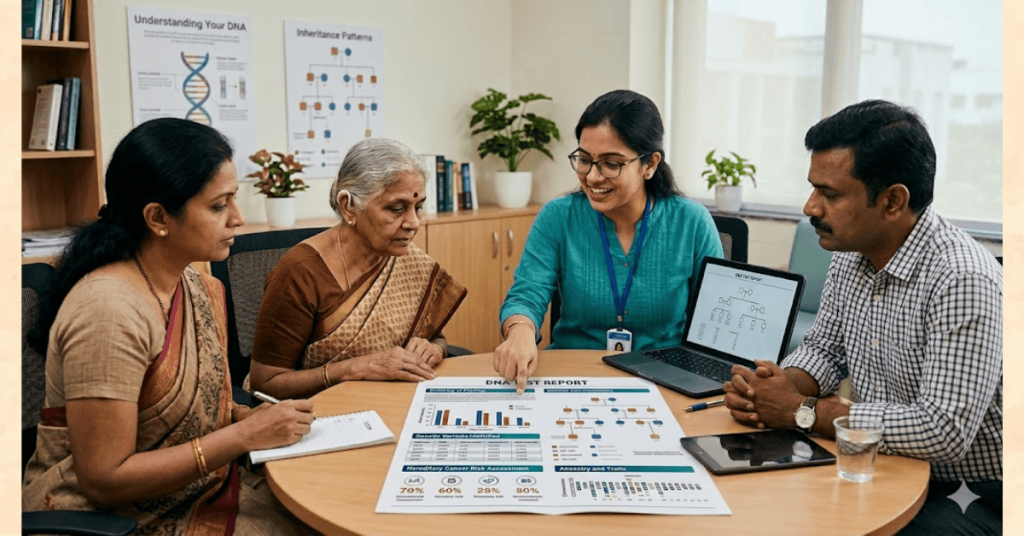
Genomic counselling sits at the sweet spot between cutting‑edge biology and real human connection. As DNA testing becomes cheaper and more common across Asia, families increasingly need trained experts who can explain what their genetic results actually mean for their health and future. This blog is for students and early‑career professionals who love biology but also want a people‑centric healthcare role, and it will show you why genomic counselling is one of the most impactful careers of the next decade.
1. Why Genomic Counselling Is Exploding in Asia
The cost of sequencing a human genome has dropped from around 100 million USD in 2001 to well under 200 USD today, making large‑scale genetic testing feasible for hospitals and consumers. As India and other Asian countries expand genetic testing for cancer risk, prenatal screening, and rare diseases, the demand for professionals who can interpret and communicate these results is rising sharply.
In India, the genetic counselling market is projected to grow from about 3.2 billion USD in 2025 to 7.6 billion USD by 2032, driven by oncology, reproductive health, and rare disease diagnostics. Many Asian health systems are embedding genetic counsellors into cancer centres, fertility clinics, and newborn screening programmes to ensure patients understand complex reports and make informed decisions. This is not a task AI can fully replace, because it hinges on empathy, nuanced communication, and cultural sensitivity in emotionally charged situations.
Practical takeaway: If you are torn between a lab‑only role and a purely counselling role, genomic counselling gives you a rare blend of both—deep science plus face‑to‑face impact with patients and families.
2. What Does a Genomic Counsellor Actually Do?
Genomic counsellors help individuals and families understand the risk of inherited conditions by reviewing genetic test results, family history, and medical records, then translating all of that into clear, actionable guidance. They commonly work in areas such as hereditary cancer (for example assessing BRCA‑related breast and ovarian cancer risk), prenatal and preconception testing, paediatric genetic disorders, and cardiac or neurological conditions with a genetic component.
On a typical day, they may:
• Take detailed family and medical histories and assess genetic risk.
• Explain what a specific gene variant means (or does not mean) for disease risk.
• Prepare patients for possible outcomes before testing (pre‑test counselling).
• Support patients emotionally after results, including when news is difficult.
• Coordinate with doctors, laboratories, and sometimes insurance providers.
Entry‑level genetic counsellors in many global markets earn in the range of 50,000–80,000 USD per year, with experienced specialists and those in leadership roles earning significantly more. In India, average salaries are lower but rising as awareness and demand grow, with early‑career roles around 2–4 lakh INR annually and higher packages in major metros and specialised centres.
Example: You might counsel a young woman whose mother had early‑onset breast cancer, explain her BRCA test results, and discuss surveillance or preventive options in a way that is medically accurate yet emotionally supportive.
3. Study Path: How to Become a Genomic Counsellor
Most genomic counsellors start with an undergraduate degree in a relevant field such as Genetics, Biotechnology, Biology, Biochemistry, Nursing, or Psychology, ensuring strong grounding in human biology and communication. The next step is usually a specialised master’s degree in genetic or genomic counselling, which combines advanced genetics, statistics, ethics, and supervised clinical placements; these programmes are available in India, Australia, Singapore, and other Asia‑Pacific countries.
Professional certification is increasingly important. Board certification from bodies such as the American Board of Genetic Counseling (ABGC) or equivalent regional organisations is recognised or valued in many Asian health systems, especially for roles in major hospitals and international research programmes. Alternative routes can include a background in medicine, biotechnology, or laboratory genetics combined with additional training in counselling skills and bioethics, but you will still need clinical exposure and formal coursework to be competitive.
Example pathway: A student completes a BSc in Biology, volunteers at a hospital genetics clinic, takes an online course in bioethics, shadows a practising genetic counsellor, and then applies for a master’s in genetic counselling with a strong, patient‑centric profile.
4. Is This Career Right for You? A Quick Self‑Check
Before committing to this path, it helps to check your fit with both the science and the human side of the role. You will be dealing with probabilities, complex reports, and rapidly evolving research, so you need genuine curiosity about how genes influence health and behaviour. At the same time, you will sit with patients who may be anxious, grieving, or making major life decisions, which demands emotional resilience and a calm, compassionate communication style.
Ask yourself:
• Do I enjoy explaining complex concepts in simple, non‑technical language?
• Am I comfortable listening to difficult stories and holding space for emotion?
• Do I want a healthcare career with significant patient interaction but without going through medical school?
• Am I prepared for continuous learning as genomics technology and guidelines evolve?
Action tip: Over the next month, pick one credible article about a genomics breakthrough in Asia—such as CRISPR‑based therapies, early‑detection cancer tests, or expanded newborn screening—and write a short reflection on what it might mean for real patients in your country. Post it on LinkedIn with your insights to start signalling your interest in this field to future mentors, employers, and universities.
Up next week on Monday, March 16: “Skills vs Degrees: What Employers Actually Want From You in 2026.” We’ll unpack which real-world skills hiring managers are prioritising over brand-name colleges and traditional qualifications. Don’t miss this if you’re serious about building a future-proof career starting now.
Conclusion:
Genomic counselling is one of the few careers where scientific rigour and human compassion are equally central, making it an ideal choice for biology‑minded students who also care deeply about people. As Asia’s genomics and precision‑medicine ecosystem scales—from India’s fast‑growing genetic counselling market to national genome programmes across the region—the need for skilled genomic counsellors who can translate DNA data into clear, ethical guidance will only increase.


